
Calculate optimal feed rates based on cutter geometry and cutting parameters. Switch between metric and imperial units as needed.
Milling is a crucial machining process used to cut, shape, or remove material from a workpiece. One of the most critical parameters in milling is the feed rate. Calculating the correct feed rate is essential for ensuring efficiency, accuracy, and extending the lifespan of cutting tools.
Today, we will thoroughly explore the concept of feed rate, provide formulas, examples for both metric and imperial units, and introduce our Milling Feed Rate Calculator to streamline your work. This guide will help you learn how to calculate milling feed rate, optimize your machining parameters and make the most out of your milling operations.
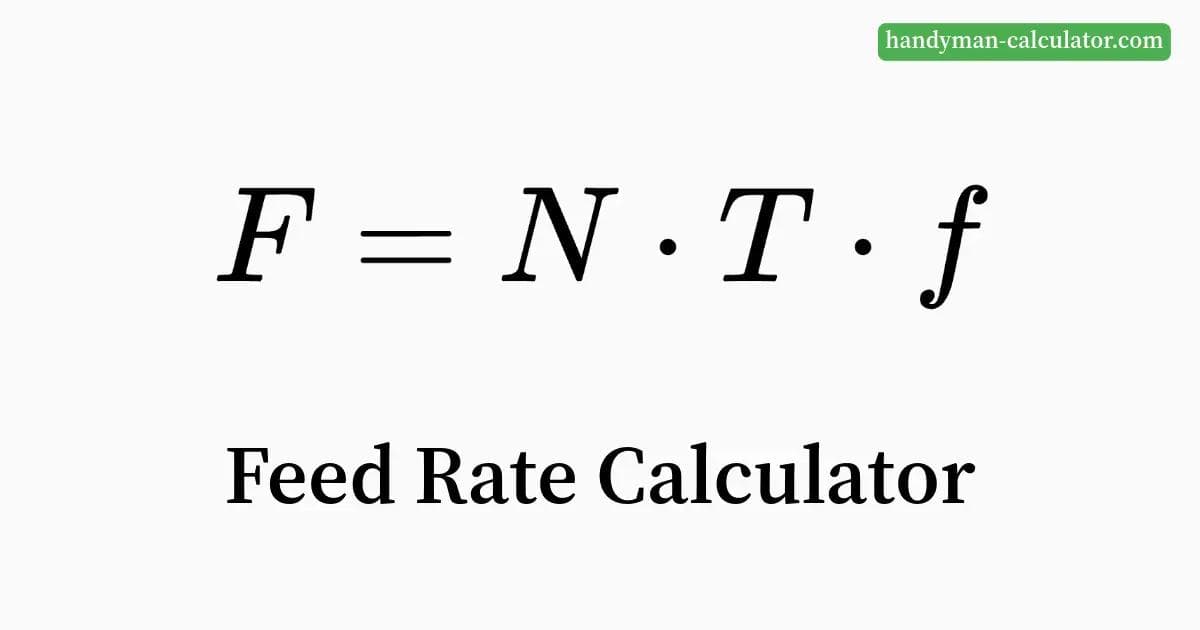
Feed rate refers to the distance the cutting tool or the workpiece moves relative to each other in one minute. It is typically measured in millimeters per minute (mm/min) in the metric system or inches per minute (IPM) in the imperial system. The feed rate significantly affects:
The fundamental formula for calculating feed rate is:
Where:
Chip load, represented by 'f' in the formula, refers to the amount of material removed by each tooth of the cutting tool per revolution. It's a critical parameter that dictates the thickness of each chip being cut. Too high of a chip load can lead to excessive tool wear and breakage, while too low of a chip load can lead to rubbing, heat buildup, and inefficient cutting.
Tool manufacturers typically provide recommended chip load values based on the tool type, material, and cutting conditions. You will often find these values in the tool's technical datasheet.
Let's look at practical examples for both metric and imperial systems.
A milling cutter with 4 teeth is cutting aluminum. The spindle speed (N) is 2000 RPM, and the feed per tooth (f) is 0.1 mm/tooth.
Calculation:
Result: The feed rate is 800 mm/min.
A milling cutter with 3 teeth is cutting steel. The spindle speed (N) is 1500 RPM, and the feed per tooth (f) is 0.004 inches/tooth.
Calculation:
Result: The feed rate is 18 inches per minute (IPM).
Several factors influence the optimal feed rate, and understanding these is vital for effective milling:
To simplify your calculations, our Milling Feed Rate Calculator handles both metric and imperial units. Simply input the required parameters to calculate the correct feed rate instantly.
Excessive feed rates can lead to tool breakage or rapid wear due to increased stress and heat on the cutting edges. A poor surface finish, potentially with visible chatter marks and inaccuracies in the machined part. Increased chance of overloading the machine, leading to premature wear and potential damage.
Too low a feed rate can lead to heat buildup as the tool rubs instead of cuts. This can damage the cutting tool and reduce its lifespan. Increased machining time, leading to reduced efficiency and productivity. Potential for work hardening on the workpiece material.
Consult the tool manufacturer's technical documentation for recommended chip load based on the material being machined and the type of cutting tool. Use online resources from reputable machining suppliers to get an indication of starting feed per tooth values. Adjust values based on your particular setup and machining experience to ensure the process is both efficient and effective. Start with a conservative value and increase as long as your tool, machine, and material permit, this will help you reduce tool wear and improve finish.
As the depth of cut increases, the amount of material being removed also increases. Generally, as depth of cut increases, you will need to reduce the feed rate to prevent overloading the tool. Adjust feed rate based on the specific cutting situation, and adjust in smaller increments as you fine-tune the process.
Feed per tooth (f) and chip load are two different names for the same concept. When talking about milling, the feed per tooth is often used. They describe how much material is removed by each tooth of the cutting tool, per rotation.
Feed Rate:
𝐹 = 2500 * 6 * 0.08 = 1200 mm/min
Feed Rate:
𝐹 = 1200 * 4 * 0.005 = 24 IPM
Feed Rate:
𝐹 = 800 * 3 * 0.04 = 96 mm/min
Calculating the correct feed rate is crucial for efficient and accurate milling operations, as well as extending the tool's life. Use our Milling Feed Rate Calculator to streamline your work, whether you're dealing with metric or imperial units. By understanding the key factors and formulas, you can optimize your machining process with ease.
Experimentation and adjustment might be required depending on your setup, but understanding the process and using the correct values will always bring you one step closer to an optimized milling process.